Crystal Clusters vs. Single Points: Which Specimen Should You Collect?
October 31, 2026 - Crystals
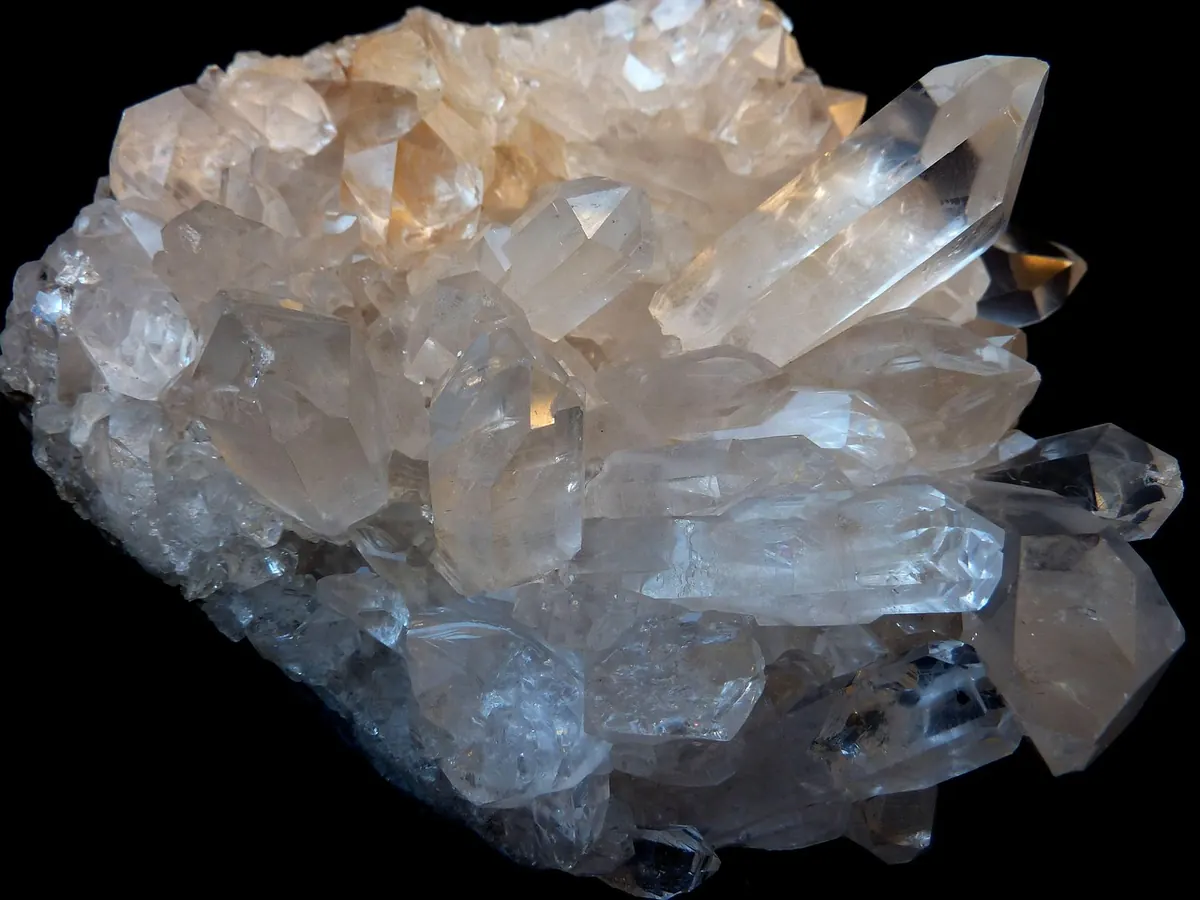
Most collectors meet this choice early, usually at a dealer's table with limited shelf space at home and a limited budget in mind. A glittering amethyst cluster on one side, a clean quartz point on the other. Both are beautiful. Both are affordable in modest sizes. They behave completely differently once they leave the show, though, and that difference matters more than most beginners expect. A cluster asks for space, patience and a steady hand whenever you move it. A single point asks for a good stand and a close look. Knowing which one suits the way you actually collect saves money, shelf space and a fair amount of quiet frustration.
A cluster forms when several crystals grow from a shared base — a pocket floor, a vein wall, a piece of host rock. The crystals compete for space as they grow, which is why cluster pieces so often show a natural push and pull: one dominant point, smaller neighbours leaning away, a crust of tiny crystals filling the gaps. Growth history is written into the specimen.
A single point is one terminated crystal, or one crystal that clearly dominates everything else on the piece. The form is easier to read. You see the full prism, the termination faces, the internal clarity, the colour zoning. Nothing is hidden behind a neighbour.
Plenty of good specimens sit between the two categories. A single large quartz crystal on a small scrap of matrix, a miniature cluster of three fluorite cubes, a tourmaline with one upright termination and a few small side crystals at the base. Dealers call these things by whatever sells them best. Judge the piece in front of you, not the label.
Clusters read well from across a room. They have silhouette, mass and a bit of theatre. A plate of golden barite blades or a group of pyrite cubes catches light from many angles at once and fills a shelf corner without needing much help. That makes clusters forgiving. Even a modest specimen can anchor a display.
Single points reward the opposite approach. They are best at arm's length, under a lamp, with your eyes level with the termination. That is where you notice the phantom inside a quartz, the sharp edges of an aquamarine, the faint colour band that shifts along a tourmaline. A single point displayed in the middle of a crowded shelf can disappear. The same crystal on a small stand, with a little empty space around it, looks deliberate.
Here is a useful test. Photograph a specimen you are considering. Clusters tend to photograph well as a whole; single points often look dull in a wide shot and come alive in a close one. If you enjoy looking at your collection through a camera or a loupe, you may lean toward points.
This is where the two forms genuinely diverge, and where experience pays off.
Every protruding termination is a place where a chip can happen. Clusters are often top-heavy, with weight concentrated above a thin matrix base, and they tend to have a rough underside that sits awkwardly on a shelf. Loose crystals are common, especially on older pieces. Move a big cluster by holding the matrix, never the crystals, and support the base with both hands. If a piece wobbles, it needs a custom base or a bed of mineral putty, not a hopeful placement near the shelf edge.
A single crystal usually has one termination to protect, which is simpler. The weak point is the base. Many points were removed from their pocket with a chisel or a saw, and the bottom can be rough, bruised or marked with saw lines. Slender crystals — thin tourmalines, long quartz spires — snap rather than chip. Repair is common in the trade: a reattached crystal or a point glued onto a cut base. Look closely at the join with a loupe and a bright light. A tidy contact with matching grain is normal; a glossy bead of adhesive, mismatched colour or a suspiciously flat base deserves a question.
Think about your actual shelf before you think about the specimen. Clusters suit deep shelves, corners and tabletops where they can be seen as a mass. They also suit a single-piece display: one strong cluster on an otherwise empty shelf looks intentional. Points work best in groups — a row of quartz, a small family of beryls, a tray of thumbnails on acrylic stands.
Light matters too. A cluster under a single spotlight throws shadows that flatten its texture, while a single point placed slightly off-axis shows both the surface and the interior. Keep coloured species out of long direct sun; amethyst and fluorite in particular are known to fade with prolonged exposure. And remember dust. A cluster of fine crystals with a hundred tiny gaps is a dust trap. A soft brush, a bulb blower and a covered cabinet will save you hours.
Ask what you are actually building, because the answer changes depending on it.
Buy one of each if you can, in modest sizes, and live with them for a few months. You will quickly learn whether you reach for the cluster to admire the whole picture or for the point to study a single termination. That preference is worth more than any rule of thumb. Keep heavy clusters low and stable, keep delicate points on stands away from the shelf edge, handle everything with clean hands and support the matrix rather than the crystals. And if a piece is fragile, repaired or difficult to display, buy it because you love it — not because it was cheap. The specimens you keep are the ones that still make you stop and look.
Photo: alusruvi / Pixabay

Mohs hardness testing can identify minerals and narrow unknowns, but only if scratches are made on inconspicuous...

Spring thaw lifts, cracks and scours the ground, briefly exposing fresh material. Here is how to time trips, read...
Copyright © 2026 Quarzo Diario. All Right Reserved.