Crystal Clusters vs. Single Points: Which Specimen Should You Collect?
October 31, 2026 - Crystals
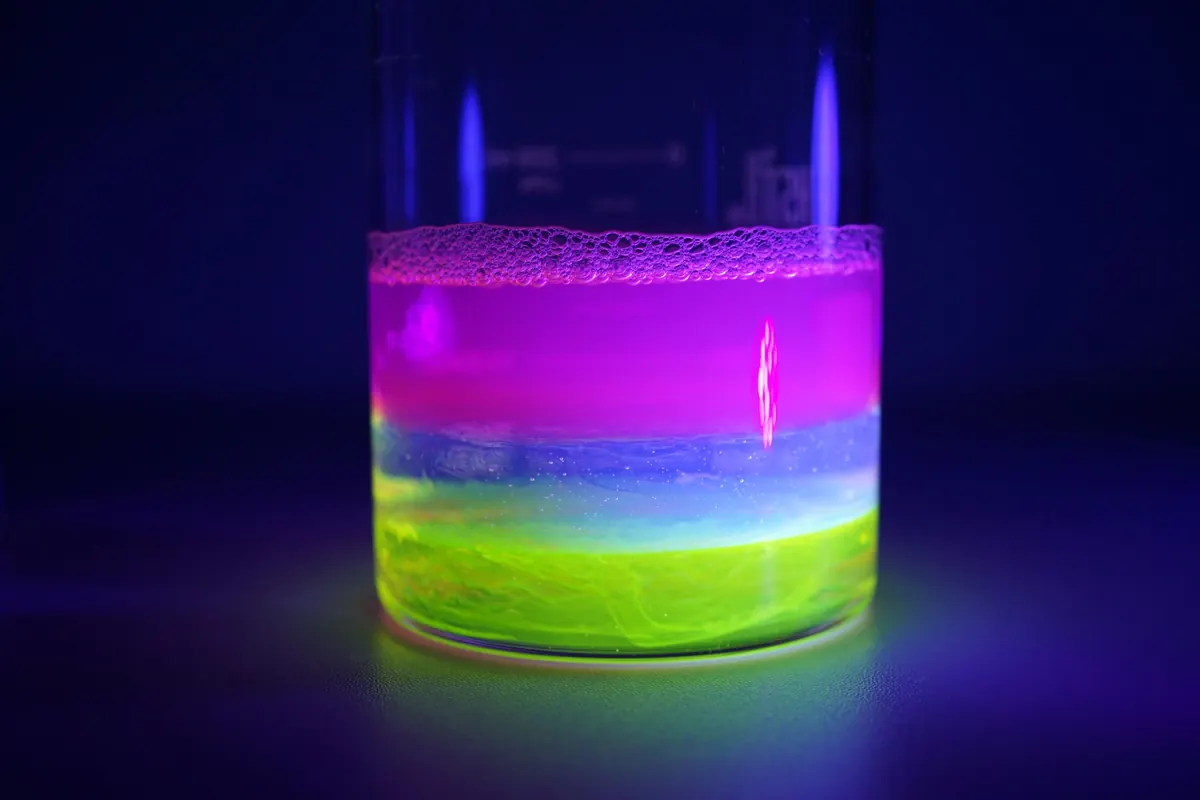
Turn off the room lights, switch on a small ultraviolet lamp, and a plain grey lump of calcite from a quarry wall burns pink-orange in the dark. Nothing about the stone changed; the light did. Fluorescence is one of the few mineral properties you can watch happen in real time, with no equipment beyond a lamp and a dark corner. It is also easy to test badly — and easy to test in a way that leaves your eyes sore for a day. A little care with the lamp, the specimens and your own dark adaptation will show you far more than a casual wave of a cheap blacklight ever will.
Fluorescence is an energy trade. A mineral absorbs ultraviolet light, whose photons carry more energy than visible light, and re-emits part of that energy as visible light at a longer wavelength. The lost energy is why the glow is always "redder" than the light going in: violet in, blue-green out, or ultraviolet in, orange out.
Whether a specimen does this depends on two things. First, the host structure has to be able to accept and release that energy — the lattice of calcite, fluorite, willemite, scheelite, apatite or sodalite all can. Second, there usually has to be an activator: a trace impurity sitting in the structure in place of the main cation. Manganese in calcite and willemite gives the familiar pink-orange and green; the uranyl ion in autunite and andersonite gives the vivid yellow-green of uranium minerals; europium, dysprosium and samarium do the work in many fluorites and apatites. A few minerals are self-activated, glowing because of a group in their own formula rather than an impurity.
Then there are the killers. Iron, copper and nickel are efficient quenchers: a fraction of a percent is enough to shut the effect down completely. This is why two specimens of the same species from different localities can behave like different minerals. It is also why a weathered crust or a dusty surface can look dead while the fresh interior, once exposed, glows strongly.
Almost every collector works with two lamps. Longwave ultraviolet sits around 365 nanometres. It is cheaper, gentler on eyes and skin, and it lights up a great many favourites: most calcites, many fluorites, hackmanite and sodalite, aragonite, and a long list of secondary uranium minerals.
Shortwave, around 254 nanometres, reaches minerals that ignore longwave entirely — several willemites, scheelite, hardystonite, esperite and clinohedrite among them. Plenty of specimens respond to both wavelengths, but with different colours, and that contrast is often the most interesting thing you will record about a piece.
Lamp quality matters more than price. A filtered 365 nm LED torch gives you a clean, almost invisible beam; an unfiltered "blacklight" bulb floods the specimen with visible purple, and that purple wash hides everything faint. If your lamp paints the rock violet, you are seeing the lamp, not the mineral. There are also midwave lamps in the 300–320 nm range, useful for a handful of species but not the place to start.
Ultraviolet is invisible, but it is still radiation, and shortwave deserves real respect. The most common injury is photokeratitis — the gritty, light-sensitive eye irritation welders call arc eye. It is temporary and thoroughly unpleasant, and it comes from looking at the source or at a strong reflection. Wear UV-blocking safety glasses or goggles, not just your normal spectacles, and keep the lamp pointed down at the specimen rather than across the room.
A few more habits worth keeping:
Once the room is dark and your glasses are on, the routine is short and repeatable.
The single most common mistake is treating colour as identification. Green fluorescence might be uranyl, manganese in willemite, or a dozen other combinations, and pink-orange calcite looks much like pink-orange dolomite until you test for hardness and acid reaction. Fluorescence narrows the field; it does not name the mineral.
Weak or absent responses are just as easy to misread. A dull result can mean a quencher, a weathered surface, an unfiltered lamp, or the wrong wavelength — not necessarily a non-fluorescent species. Keep a small reference set of known responders, a calcite from a locality you trust and a piece of willemite or scheelite, so you can judge brightness against a constant rather than against memory. Photograph with fixed settings and no flash, or your camera will quietly change exposure between shots and the comparison is worthless.
Tenebrescence is not fluorescence at all: hackmanite darkens under ultraviolet or sunlight and fades again in ordinary light. Triboluminescence is the flash you get from scratching or rubbing certain sphalerites and quartzes. Both are worth noting in your log, and both confuse people who see them for the first time in a dark room.
You do not need much: a filtered 365 nm torch, a shielded shortwave lamp, UV-blocking goggles, a black cloth or bag to kill stray light, a soft brush, a notebook, and a small clamp or tripod so you can work hands-free. Add a labelled box for anything uranium-bearing and keep it separate.
Test one thing at a time and change one variable at a time. Clean the specimen before you blame the lamp. Note the wavelength every time, because a specimen that "doesn't fluoresce" under longwave may be spectacular under shortwave. And keep the sessions short — a few minutes of careful observation in a properly dark room will tell you more about a specimen than an hour of waving a torch around a lit kitchen.
Photo: Nancy Zjaba / Pexels
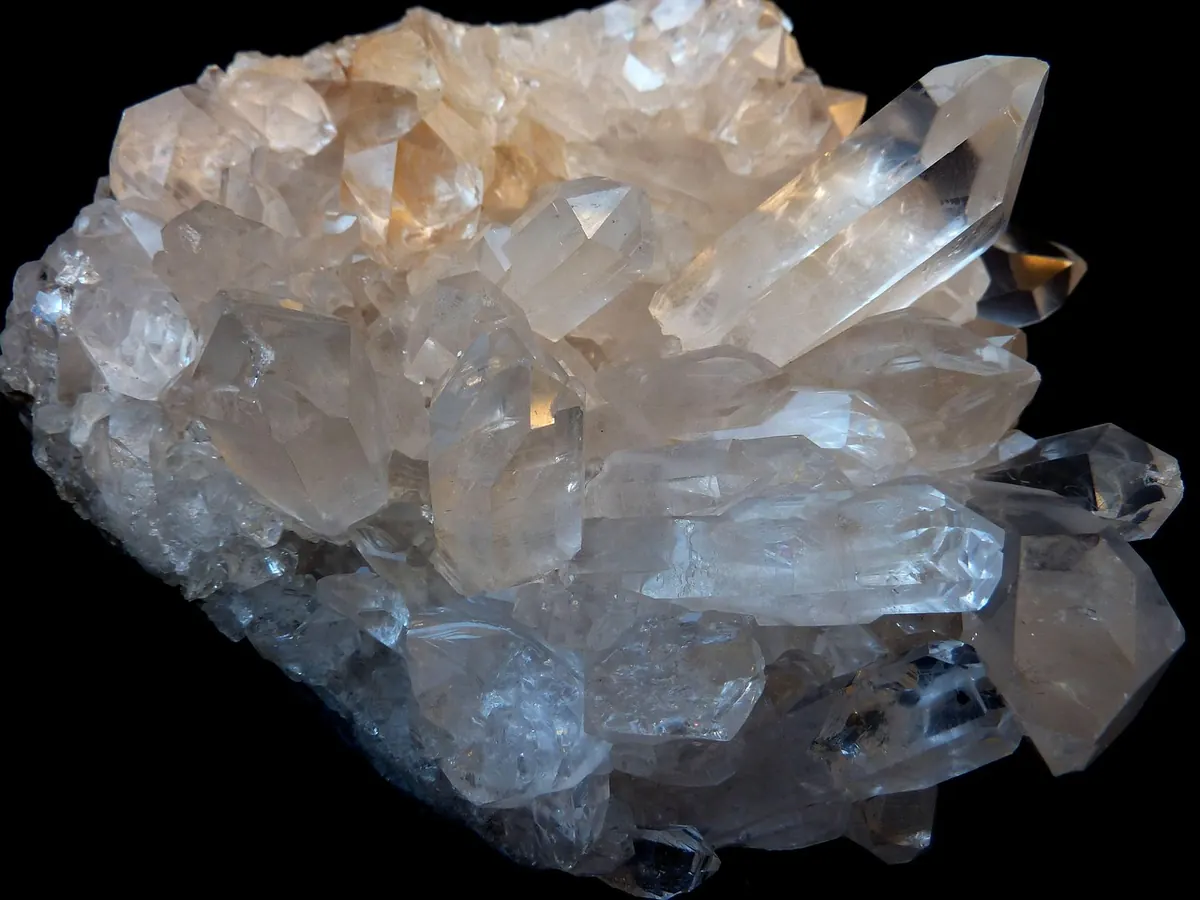
Clusters bring drama, context and a story about how crystals grow; single points bring clarity, easy display and a...
Mohs hardness testing can identify minerals and narrow unknowns, but only if scratches are made on inconspicuous...
Copyright © 2026 Quarzo Diario. All Right Reserved.